
Sewing Patterns
Underwear Sewing Pattern: Fit and Elastic Guide
Jul
An underwear sewing pattern is small, but it is one of the clearest lessons in knit fit. In the local Semrush export, “underwear sewing pattern” shows 720 monthly searches with keyword difficulty 8, giving Pattern Lab Co a practical low-competition topic with tutorial intent.
This guide explains how to choose an underwear pattern, test knit stretch, pick elastic or fabric bands, sew the gusset, adjust rise and coverage, and make a test pair that tells you what to change before batch sewing.
Key Takeaways
- Choose underwear by hip measurement, rise, back coverage, gusset shape, elastic method, and fabric stretch.
- Knit fabric must stretch and recover; beautiful fabric that bags out will not feel good after wearing.
- Elastic length controls comfort, pressure, and leg shape, so test one pair before cutting several.
- A clean gusset and soft seam finish matter more than decorative details for daily underwear.
What Makes an Underwear Sewing Pattern Comfortable?
Comfortable underwear balances negative ease, stretch recovery, gusset shape, elastic pressure, and seam softness. Megan Nielsen’s Acacia tutorial shows several elastic methods, which is useful because edge finish changes both fit and feel.
The pattern should match the coverage you actually wear. A high-rise brief, bikini, hipster, boyshort, and thong all distribute pressure differently. Start with a familiar silhouette before experimenting with new shapes.
If you are newer to knit projects, review our T-shirt sewing pattern guide. The fabric stretch checks are similar, but underwear has less room for error.
How Do You Choose the Right Underwear Size?
Choose the starting size from hip measurement and the pattern’s finished stretch assumptions. Tilly and the Buttons recommends grading between sizes when body measurements cross size columns, and that same idea applies to underwear patterns.
Do not size down just because underwear uses stretch. Negative ease is already built into most patterns. Extra sizing down can make elastic dig, leg openings ride up, and the gusset pull out of position.
Check rise and coverage before cutting final fabric. Compare the paper pattern to a pair you like, allowing for seam allowance and elastic finish. That comparison is often faster than guessing from a product photo.
If the front and back need different coverage, alter gradually at the side seam or rise line. Keep the leg opening smooth so the elastic can distribute without sharp corners.
Which Fabric Works Best for Underwear?
The best underwear fabric is soft against the skin, stretches enough for movement, and recovers after wearing. Closet Core Patterns explains that knit fabrics vary in composition, direction of stretch, weight, and recovery, so the label alone is not enough.
Use cotton jersey with spandex, bamboo jersey, modal jersey, stretch mesh, or lightweight rib knit depending on the pattern. For the gusset lining, many sewists prefer breathable cotton jersey because it is soft and easy to wash.
Test stretch percentage before cutting. Megan Nielsen explains that stretch percentage compares the stretched width to the unstretched width. If the pattern requests 50 percent stretch and your fabric gives 25 percent, the fit will change.
Also test recovery. Stretch a sample, release it, and see whether it snaps back or stays longer. Fabric that does not recover can feel comfortable for one hour and loose by the end of the day.
Cut the gusset lining from a fabric that feels smooth after washing. The lining does not have to match the outer fabric, but it should stretch in the right direction and avoid scratchy printed surfaces.
Should You Use Elastic or Fabric Bands?
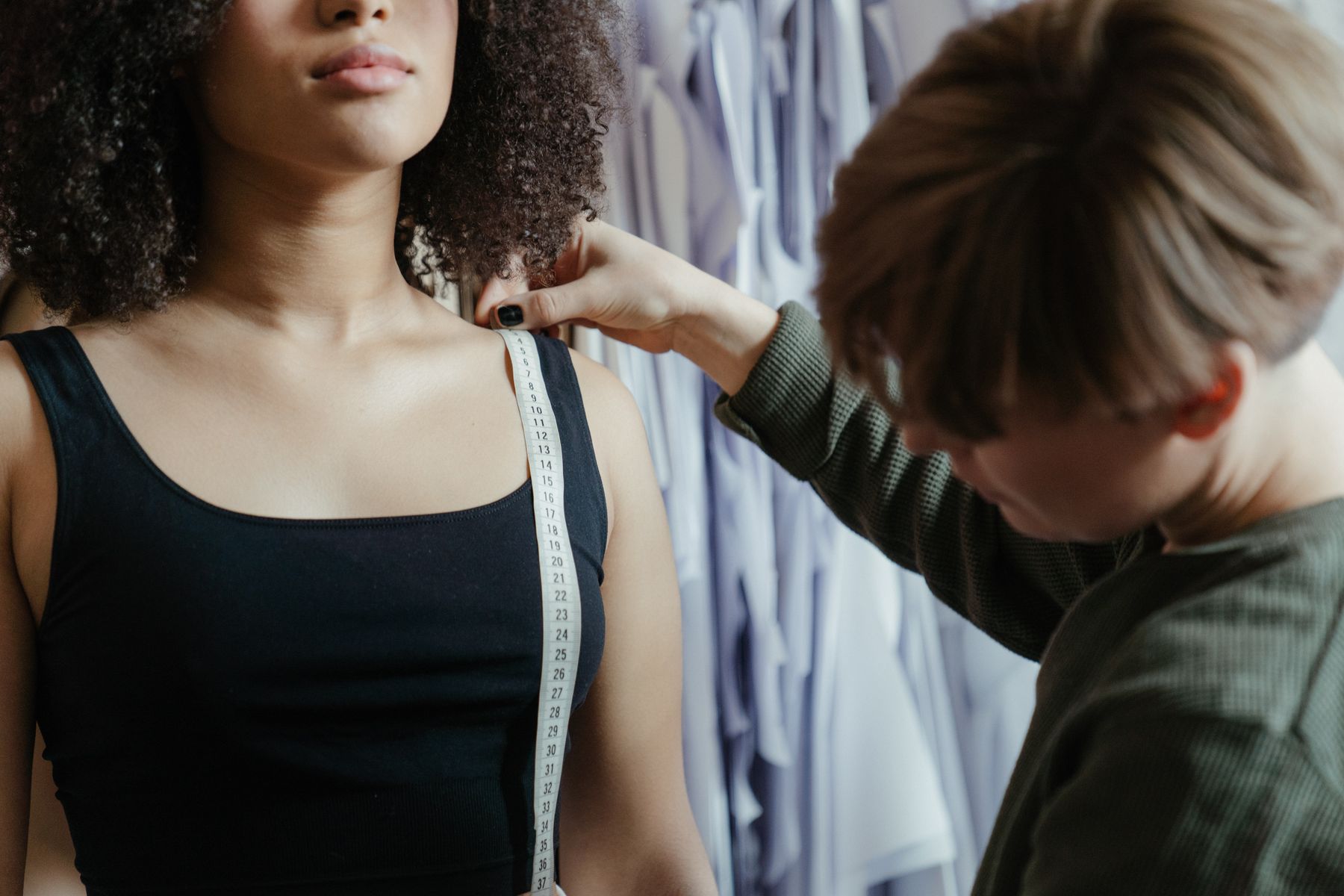
Elastic gives a secure edge, while fabric bands can feel softer when the fabric has enough stretch and recovery. Megan Nielsen’s fabric band tutorial recommends strong stretch for bands because they do much of the work of holding the underwear in place.
Picot elastic, fold-over elastic, plush-back elastic, clear elastic, and fabric bands all change the finished edge. The pattern instructions may account for one method, so changing the finish can change rise and leg opening size.
Cut one test length before sewing the final pair. Wrap it around the waist or leg opening area with gentle tension. It should feel secure, not sharp. Elastic that feels tight in your hand will feel tighter after a full day.
For elastic handling in a larger garment, compare the waistband logic in our wrap pants sewing pattern guide. Small pressure changes still matter.
How Do You Sew the Gusset Cleanly?
The gusset should be smooth, breathable, and free of bulky seams. Many underwear patterns use a burrito method or enclosed seam so the lining covers the crotch seam neatly.
Mark the front and back gusset edges before sewing. Small pieces can look similar after cutting, and reversing the gusset can shift the comfort point. Use clips instead of pins if the knit snags easily.
Press lightly after sewing, then check that the gusset lies flat. Do not stretch this area while topstitching. A wavy gusset seam can feel irritating even when the rest of the pair fits well.
If your fabric is very light, reduce bulk by trimming seam allowances carefully. If it is very stretchy, use wash-away stabilizer under the seam while stitching.
What Stitch Should You Use for Underwear Seams?
Use a narrow zigzag, stretch stitch, triple zigzag, serger seam, or coverstitch where the garment needs movement. Megan Nielsen’s Acacia tutorial uses zigzag stitching for elastic, which keeps the edge flexible.
A straight stitch can pop when the garment stretches. If you use a straight stitch for basting, remove it or keep it in low-stretch areas only. Test every stitch on the same fabric and elastic layers.
Use a ballpoint or stretch needle and good thread. Skipped stitches are common on elastic and fine knits when the needle is wrong. Change the needle before blaming the machine tension.
Topstitch elastic with consistent tension. Stretch the elastic enough to match the fabric edge, but do not pull the fabric itself. That balance keeps the opening smooth.
Common Underwear Pattern Mistakes to Avoid
The most common mistake is batch cutting before testing one pair. Underwear is fast, so it is tempting to cut a stack. Make one wearable sample first, then adjust rise, elastic, or coverage.
Another mistake is using pretty fabric with poor recovery. A soft knit that grows during the day will not stay comfortable. Recovery matters as much as initial stretch.
Do not ignore elastic direction or plush side. Some elastics have a softer side for the skin. Sewing them backward can make an otherwise good pair irritating.
- Do not over-stretch elastic while sewing. It can make leg openings dig in.
- Do not skip the gusset lining. It improves comfort and durability.
- Do not use bulky seams. Trim and press small allowances carefully.
What Should You Check Before Sewing More Pairs?
Before sewing more pairs, wear and wash the test pair. Check waist pressure, leg opening comfort, back coverage, gusset position, seam softness, fabric recovery, and whether the elastic twists or rolls.
Mark changes directly on the pattern copy. Adjust rise, side seam height, leg opening curve, or elastic length in small increments. Underwear changes are often measured in millimeters rather than large pattern edits.
Keep notes for each fabric. Cotton spandex, bamboo jersey, modal, rib knit, and stretch mesh can all need different elastic lengths. A fabric-specific note saves the next batch.
For another beginner-friendly knit fitting project, our free tank top sewing pattern guide is a useful next step for testing stretch and binding.
Frequently Asked Questions
Is an underwear sewing pattern beginner friendly?
Yes, a simple brief or bikini pattern can be beginner friendly if you are comfortable sewing knits. Choose stable cotton spandex, simple elastic, and a pattern with clear gusset instructions for the first pair.
Can I sew underwear without a serger?
Yes. A regular sewing machine with a narrow zigzag, triple zigzag, or stretch stitch can sew underwear well. Test the stitch on fabric and elastic scraps to confirm it stretches without popping.
What fabric should I use for my first underwear pattern?
Use cotton spandex jersey or bamboo jersey with good recovery. It should feel soft, stretch enough for the pattern, and return to shape after being pulled. Use cotton jersey for the gusset lining.
How tight should underwear elastic be?
Elastic should feel secure without digging in. Cut the pattern’s suggested length first, then adjust after a wearable test pair. Different elastics and fabrics can need different amounts of tension.
Sources
- Semrush keyword export, Pattern Lab Co workspace, retrieved 2026-07-23.
- Megan Nielsen Patterns, How to Sew Your Own Acacia Underwear, retrieved 2026-07-23.
- Megan Nielsen Patterns, How to Sew Underwear with Fabric Bands, retrieved 2026-07-23.
- Megan Nielsen Patterns, How to Calculate Stretch Percentage, retrieved 2026-07-23.
- Closet Core Patterns, Understanding Knit Fabrics, retrieved 2026-07-23.
- Tilly and the Buttons, How to Combine Pattern Sizes, retrieved 2026-07-23.
